Neha

Author name: Demo

Blog

E-commerce: Online Business and Marketing

Introduction Imagine discovering a dress on Instagram, visiting a website, checking the size and price, paying online and receiving the product at your doorstep a few days later. That entire journey is part of e-commerce. E-commerce, short for electronic commerce, refers to buying and selling products or services through digital channels such as websites, marketplaces, mobile apps and social platforms. It has changed the way businesses reach customers and the way people shop. For businesses, e-commerce is not simply about creating an online store. A successful e-commerce business needs the right products, website experience, payment system, marketing strategy, customer service, logistics and retention strategy. In this blog, let’s understand e-commerce, how it works and how digital marketing helps an online business grow. What Is E-commerce? E-commerce is the buying and selling of goods or services through the internet. An e-commerce business can sell: For example, when a customer purchases clothing from an online fashion store, the transaction is e-commerce. E-commerce can happen through a company’s own website, an online marketplace, social media platforms or mobile applications. Today, businesses can choose between building their own online store and selling through established marketplaces—or use both approaches. How Does E-commerce Work? Although shopping online may look simple to the customer, several activities happen behind the scenes. A typical e-commerce journey looks like this: 1. Product discovery A customer discovers a product through Google, social media, an advertisement, an influencer, email or another website. 2. Product page The customer visits the product page and checks photographs, description, price, sizes, specifications, reviews and delivery information. 3. Add to cart The customer selects the product and adds it to the shopping cart. 4. Checkout The customer enters delivery details and selects a payment method. 5. Payment The payment is processed through the chosen payment gateway or payment method. 6. Order processing The business receives the order, updates inventory and prepares the product for dispatch. 7. Shipping and delivery The product is packed and delivered to the customer’s address. 8. Post-purchase experience The business can follow up with order updates, feedback requests, product recommendations or offers for future purchases. This means e-commerce involves much more than simply displaying products online. It connects marketing, technology, payments, inventory, logistics and customer relationships. Types of E-commerce There are several major e-commerce business models. 1. B2C – Business to Consumer This is one of the most common models. A business sells directly to individual customers. Example: An online fashion store selling a kurti to a customer. 2. B2B – Business to Business A business sells products or services to another business. Example: A manufacturer selling packaging materials to an e-commerce company. 3. C2C – Consumer to Consumer One consumer sells to another consumer through a marketplace. Example: Someone selling a used product through an online marketplace. 4. C2B – Consumer to Business An individual provides a product or service to a business. Example: A photographer creating product photographs for an online brand. 5. D2C – Direct to Consumer A brand sells directly to customers through its own online channels rather than relying entirely on traditional intermediaries. D2C has become an important model for many modern brands because it allows businesses to build a direct relationship with customers. Why Is E-commerce Important for Businesses? 1. Wider Customer Reach A physical store primarily serves customers who can visit its location. An online store can potentially reach customers beyond the local area. For example, a boutique based in Bangalore can market its products to customers across India. 2. 24/7 Availability An online store doesn’t have to close at the end of the working day. Customers can browse products and place orders whenever it is convenient for them. 3. Better Customer Insights Digital platforms can provide useful information about customer behavior. Businesses can analyze: These insights can help marketers improve their strategies. 4. Easier Marketing Measurement Digital marketing allows businesses to connect campaigns with measurable actions. For example, a marketer can evaluate how many people clicked an advertisement, visited a product page, added an item to the cart or completed a purchase. What Is E-commerce Marketing? Having an online store doesn’t automatically bring customers. This is where e-commerce marketing becomes important. E-commerce marketing is the process of attracting potential customers to an online store, converting them into buyers and encouraging them to return. A useful way to understand it is through three stages: Traffic → Conversion → Retention Traffic First, businesses need people to discover their products. Traffic can come from: Conversion Getting visitors isn’t enough. The website must convince visitors to purchase. Important conversion factors include: Retention The relationship shouldn’t end after the first purchase. Businesses can encourage repeat purchases through: E-commerce marketing therefore involves the complete customer journey rather than just advertising. The Role of SEO in E-commerce SEO can help potential customers discover products through search engines. For example, someone searches: “cotton kurti for women” An e-commerce website with well-optimized product and category pages has an opportunity to appear for relevant searches. E-commerce SEO can include: Google continues to develop its support for product-related structured data and shopping experiences, including product variants. This makes SEO an important long-term component of e-commerce marketing. Social Media and E-commerce Social media has also changed online shopping. A customer might see a product in an Instagram video, become interested, visit the brand’s profile and eventually purchase the product. For an e-commerce brand, social media can be used to: For example, a fashion brand could create a short video showing “3 ways to style one kurti.” Instead of simply saying “Buy this kurti,” the content provides useful information while naturally introducing the product. Challenges of E-commerce E-commerce offers significant opportunities, but it also comes with challenges. High Competition Customers can compare products from many businesses within seconds. Building Trust Customers cannot physically touch or examine a product before purchasing it. Therefore, photographs, reviews, product information and transparent policies become important. Shipping and Returns Delivery delays, damaged products and returns can affect customer satisfaction and profitability. Cart

Blog

What Is WordPress- Complete Guide

If you want to create a website but don’t know how to code, you may have heard of WordPress. WordPress is a popular content management system (CMS) that allows people and businesses to create, manage and publish content on websites without having to build everything from scratch using code. It can be used to create many different types of websites, including: One of the biggest advantages of WordPress is its flexibility. A beginner can start with a simple website and gradually add more features as the business or project grows. How Does WordPress Work? At a basic level, a WordPress website consists of several important components. Domain Name Your domain is your website’s address on the internet. For example: www.example.com People type your domain into their browser to access your website. Web Hosting Web hosting is where your website’s files and database are stored. When someone visits your website, the hosting server delivers the website’s content to their browser. WordPress WordPress provides the system you use to manage your website. Through the WordPress dashboard, you can create pages, publish blog posts, upload images, manage menus and install additional functionality. Think of it this way: Domain = Your website’s address Hosting = The space where your website lives WordPress = The system you use to manage it WordPress.com vs WordPress.org One of the first things beginners should understand is that WordPress.com and WordPress.org are different services. WordPress.com WordPress.com is a hosted platform. Much of the technical infrastructure is managed for you. It can be convenient for people who want a simpler setup. WordPress.org WordPress.org provides the WordPress software that you can install on your own web hosting. This option generally gives you more control over your website, themes, plugins and customization. For businesses and people who want greater flexibility, self-hosted WordPress is often an attractive option. Before starting, it is important to understand which WordPress option fits your needs. What Is the WordPress Dashboard? The WordPress dashboard is the administrative area where you manage your website. After logging in, you can access tools for managing different parts of your site. Common sections include: The exact options you see can vary depending on your WordPress version, theme and installed plugins. For beginners, the dashboard may look complicated at first, but most website management tasks become easier with practice. Pages vs Posts in WordPress Another important concept is understanding the difference between pages and posts. Pages Pages are generally used for relatively permanent website information. Examples include: Posts Posts are generally used for regularly published content such as blog articles and news updates. For example, a digital marketing website might publish posts such as: “10 SEO Mistakes Beginners Should Avoid” or “SEO vs Google Ads: Which One Should Your Business Choose?” Posts can be organized using categories and tags, depending on how you structure your website. What Are WordPress Themes? A WordPress theme controls much of the visual appearance and layout of your website. It can influence: There are thousands of WordPress themes available, ranging from simple blog designs to sophisticated business and e-commerce layouts. When choosing a theme, don’t select one only because it looks attractive. Consider: A clean, fast and easy-to-use design is usually more valuable than a website filled with unnecessary visual effects. What Are WordPress Plugins? Plugins are one of the features that make WordPress extremely flexible. A plugin can add functionality to your website without requiring you to develop that functionality completely from scratch. Depending on the plugin, you can add features such as: For example, an e-commerce business can use a plugin to add product pages, shopping-cart functionality and checkout features. However, installing too many plugins can create maintenance, compatibility and performance issues. It is better to install only plugins that your website actually needs. What Is Elementor? If you have worked with WordPress, you may have heard about Elementor. Elementor is a visual website builder that allows users to design pages using a drag-and-drop interface. Instead of editing website code directly, users can work with elements such as: This can make page creation much easier for beginners. For example, you could create a landing page with: Headline → Image → Benefits → Testimonials → Lead Form → Call-to-Action and arrange these elements visually. Elementor can therefore be useful for marketers and small-business owners who want to create and edit website pages without depending on a developer for every small change. Why Is WordPress Useful for Digital Marketers? WordPress is particularly useful for digital marketers because a website is often the central part of a digital marketing strategy. A marketer can use a WordPress website for: SEO Publish optimized content and create pages targeting relevant search queries. Content Marketing Create blogs, guides, case studies and other useful resources. Lead Generation Add contact forms, landing pages and calls-to-action. Analytics Connect analytics and other marketing tools to understand website performance. Social Media Share website content across social platforms and drive visitors back to the website. This makes WordPress a valuable skill for people learning digital marketing. Benefits of WordPress There are several reasons why WordPress is popular. 1. Easy to Start Beginners can create and manage websites without being expert programmers. 2. Flexible WordPress can be used for simple blogs as well as more complex websites. 3. Customizable Themes, plugins and page builders provide many customization options. 4. Suitable for Content Marketing Publishing and managing blog content is one of WordPress’s core strengths. 5. Large Ecosystem There are many themes, plugins, tutorials, developers and resources available. 6. Scalable A website can start small and add features as its requirements grow. Things to Keep in Mind Although WordPress is powerful, it is not completely maintenance-free. Website owners should pay attention to: Before making major changes, keeping a recent backup is a good practice. Security is particularly important because outdated software or poorly maintained plugins can create vulnerabilities. How to Start a WordPress Website For a beginner, the process can be simplified into these steps: Step 1: Choose a domain

Blog

SEO vs Google Ads: Which One Should Your Business Choose?

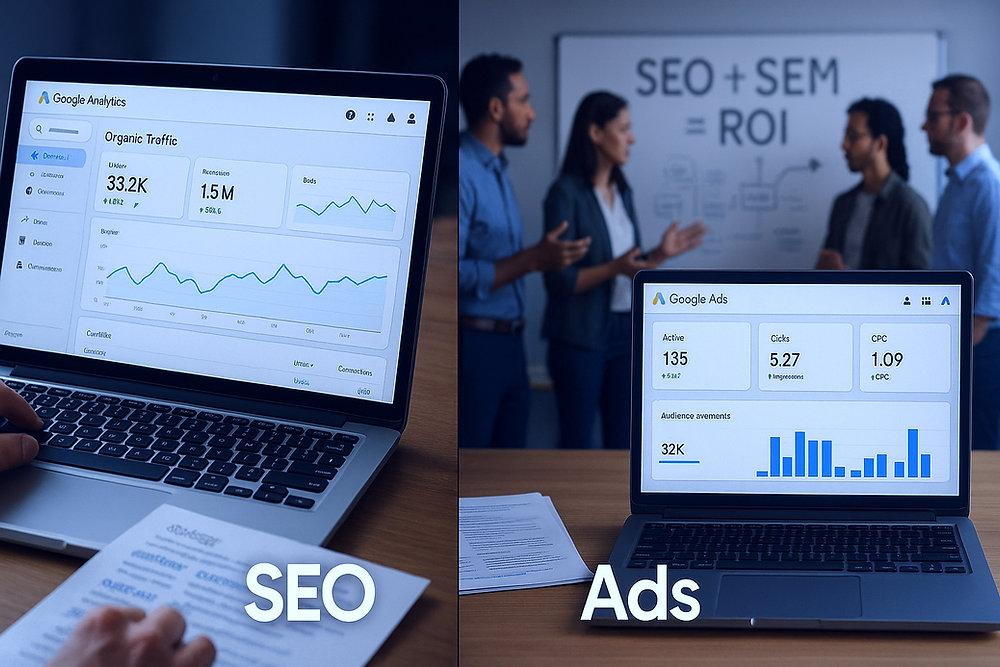
Introduction When people need a product or service, one of the first places they often go is Google. They might search for “best playschool near me,” “digital marketing agency in Bangalore,” “designer kurtis online,” or “best dentist near me.” For businesses, this creates an important opportunity: How do you make your business visible when potential customers are searching? Two of the most popular approaches are Search Engine Optimization (SEO) and Google Ads. But which one should you choose? The answer isn’t simply that SEO is better than Google Ads or vice versa. They solve different problems. SEO is generally a long-term strategy for earning organic visibility, while Google Ads can provide paid visibility when you want to reach relevant searches and control your advertising campaign. Google itself describes SEO as improving a site’s presence in organic Search, while Google Ads allows businesses to bid for opportunities to show ads alongside relevant searches. For many businesses, the smartest approach is actually SEO + Google Ads. Let’s understand why. What Is SEO? SEO stands for Search Engine Optimization. It involves improving your website and content so that search engines can better understand your pages and users can discover them through organic search results. Google’s SEO guidance emphasizes helping search engines understand your content and helping users find your website through Search. SEO can include: For example, if you own a preschool in Bangalore, you might create a page targeting “playschool in Bangalore” and supporting content around topics parents actually search for. If your page becomes visible in relevant organic results, people can discover your business without you paying Google for each organic click. Google states that businesses do not pay to appear in organic search results. What Is Google Ads? Google Ads is a paid advertising platform that allows businesses to show advertisements to people searching for relevant products and services. For example, if someone searches: “best digital marketing course in Bangalore” a business running a relevant Search campaign may be eligible to show an advertisement for that search. Google Search Ads work through an auction system. Advertisers select relevant targeting and bids, while Google’s systems determine which eligible ads are shown. With Google Ads, businesses can control factors such as: Google Ads can therefore be useful when a business wants to generate visibility and traffic without waiting for organic rankings to develop. SEO vs Google Ads: The Major Differences Factor SEO Google Ads Type Organic Paid Cost model No payment to Google for organic clicks Advertising spend Speed Usually takes time Can generate visibility quickly Long-term value Strong potential Depends on ongoing ad spend Control Less direct control over rankings More control over campaign settings Content requirement Very important Important for landing pages and ads Best for Long-term visibility Immediate/short-term campaigns Suitable for Sustainable organic growth Leads, sales and promotions The biggest difference is simple: SEO aims to earn visibility. Google Ads pays for advertising opportunities. Which Is Better for a New Business? Imagine you have just launched a new business website. You have almost no organic search visibility yet, but you need customers. This is where Google Ads can be useful. You can create a campaign targeting relevant searches and send potential customers to a landing page. At the same time, you can start building SEO. This creates a useful two-part strategy: Google Ads → Immediate visibility SEO → Long-term organic visibility Instead of waiting months for SEO before starting marketing, a business can use paid search while its organic presence develops. When Should You Choose SEO? SEO may be a better priority when: 1. You Want Long-Term Traffic If you want your website to attract relevant organic visitors over time, SEO should be part of your strategy. 2. You Have Useful Content to Share Businesses that can consistently create helpful articles, guides, service pages and resources can build an organic search presence. 3. Your Customers Search Before Buying SEO can be particularly valuable when potential customers actively search for information related to your products or services. 4. You Want to Build an Online Asset Unlike an advertising campaign that stops delivering when you stop spending, successful SEO work can continue attracting organic visibility after the initial work is completed. However, this does not mean SEO is free or guaranteed. Businesses still need to invest time, expertise, content and website improvements, and Google does not guarantee first-page rankings. When Should You Choose Google Ads? Google Ads may be a better priority when: 1. You Need Leads Quickly If your business has an immediate sales target, paid search can help you reach people actively searching for relevant offerings. 2. You Have a Time-Sensitive Offer Suppose you’re running a limited-time sale, admission campaign or seasonal promotion. Google Ads can help you promote that offer while it is relevant. 3. You’re Launching a New Product A new product may not have strong organic rankings yet. Paid search can provide another route to visibility. 4. You Want More Campaign Control Google Ads allows you to set budgets, targeting and campaign parameters, giving you more direct control over the advertising activity. What About Cost? This is where many business owners misunderstand SEO and Google Ads. They may think: “SEO is free, and Google Ads is expensive.” That’s not quite accurate. With SEO, you may not pay Google for organic clicks, but you still have costs such as: With Google Ads, you directly allocate an advertising budget and pay according to the campaign’s charging model. Therefore, the real question isn’t simply: “Which one is cheaper?” It is: “Which channel produces the best business results for my budget and goals?” Can SEO and Google Ads Work Together? Absolutely—and this is often the most practical approach. SEO and Google Ads can support each other. Suppose you sell online courses. You could use Google Ads to target high-intent searches such as: “digital marketing course online” At the same time, your SEO strategy could target informational searches such as: The paid campaign can focus on immediate opportunities, while SEO

Blog

AI in Digital Marketing: Will AI Replace Digital Marketers?

Introduction Artificial Intelligence (AI) is changing the way businesses work—and digital marketing is no exception. From creating social media captions and analyzing customer data to generating images, optimizing advertisements and helping with SEO, AI-powered tools are becoming part of everyday marketing workflows. This has led to an important question: Will AI replace digital marketers? The short answer is probably not—but it will change what digital marketers do. AI can automate many repetitive tasks and help marketers work faster. However, marketing involves much more than producing content or analyzing numbers. Understanding customers, developing strategies, making creative decisions and building a strong brand still require human judgment. The future is therefore less about AI versus marketers and more about marketers using AI effectively. What Is AI in Digital Marketing? AI in digital marketing refers to using artificial intelligence technologies to perform tasks that traditionally require human effort, such as analyzing information, identifying patterns, generating content and assisting with decision-making. AI can help marketers with activities such as: For example, an AI tool can help a marketer generate several headline ideas for an advertisement within seconds. The marketer can then review those ideas, select the strongest one and adapt it to the brand’s tone. This demonstrates an important point: AI can assist the marketer, but the marketer still makes the final decision. How AI Is Changing Digital Marketing 1. AI Is Making Content Creation Faster Content creation is one of the areas where marketers are seeing significant changes. AI tools can help generate: Instead of starting with a blank page, marketers can use AI to create a first draft and then improve it. However, AI-generated content should not simply be copied and published without review. Marketers need to check accuracy, originality, tone, relevance and whether the content genuinely helps the audience. AI can speed up content creation—but quality still depends on human input. 2. AI Can Help With SEO Search engine optimization involves researching keywords, understanding search intent, creating useful content and analyzing website performance. AI can assist marketers by helping with: But SEO is not simply about inserting keywords into an article. A successful SEO strategy requires understanding the audience, competitors, business objectives and search behaviour. Human expertise remains important when deciding what content a website should create and how it should support the overall marketing strategy. 3. AI Is Transforming Advertising Digital advertising involves creating advertisements, selecting audiences, managing budgets and analyzing performance. AI can help identify patterns in campaign data and automate certain optimization processes. For example, advertising platforms can use machine learning to help determine which users are more likely to take a desired action. Marketers can then use performance data to make strategic decisions about their campaigns. The role of the marketer is increasingly shifting from manually managing every small task toward strategy, experimentation and interpretation of results. 4. AI Makes Personalization Easier Customers don’t always want generic marketing messages. AI can help businesses analyze customer behaviour and deliver more relevant experiences. For example, an e-commerce business might use customer data to recommend products based on previous browsing or purchasing behaviour. Email marketing can also become more personalized through audience segmentation and automated campaigns. However, personalization must be handled responsibly. Businesses need to consider privacy, transparency and the appropriate use of customer data. So, Will AI Replace Digital Marketers? This is the big question. AI will likely replace some tasks, particularly repetitive and highly predictable tasks. For example, marketers may spend less time manually: But replacing individual tasks is very different from replacing an entire profession. A digital marketer needs to understand questions such as: Who is our customer? What problem are we solving? Why should customers choose our brand? What should our marketing strategy be? Which message will resonate with our audience? How should we respond when a campaign fails? These decisions involve context, judgment, creativity and business understanding. AI can provide suggestions, but it doesn’t automatically understand the complete picture of a business. What Skills Will Digital Marketers Need in the AI Era? The rise of AI doesn’t mean marketers should stop learning marketing fundamentals. Instead, marketers need a combination of marketing knowledge + AI skills. 1. Strategic Thinking Understanding business objectives and creating marketing strategies will remain extremely valuable. 2. Creativity AI can generate many ideas, but marketers need to recognize which ideas are interesting, relevant and aligned with the brand. 3. Data Analysis Marketers need to understand metrics and turn data into meaningful decisions. 4. Communication Strong writing, storytelling and communication skills will continue to matter. 5. AI Literacy Marketers should understand how AI tools work, what they can do and where their limitations are. 6. Critical Thinking AI can make mistakes or produce inaccurate information. Marketers must be able to evaluate and verify AI-generated outputs. AI + Human: The Winning Combination The most effective approach may not be choosing between AI and humans. It is combining the strengths of both. AI provides: Humans provide: Imagine a digital marketer planning a campaign. AI can analyze previous campaign data and suggest audience segments. It can generate headline variations and summarize performance. But the marketer decides which audience to target, what story the campaign should tell, how the brand should position itself and whether the campaign feels authentic. That combination can be much more powerful than either working alone. How Beginners Can Prepare for an AI-Powered Marketing Future If you are learning digital marketing today, don’t be afraid of AI. Learn how to use it. Start by developing strong fundamentals in: Then learn how AI can support each area. For example: SEO + AI → Research and content assistanceSocial Media + AI → Ideas, captions and content planningGoogle Ads + AI → Campaign optimization and ad variationsEmail Marketing + AI → Personalization and draftingAnalytics + AI → Data interpretation and insights The goal is not to become dependent on AI. The goal is to become a better marketer because you know how to use AI intelligently. The Future of Digital Marketing AI will continue to

Blog

Social Media Marketing

What Is Social Media Marketing? Social media has changed the way people communicate, discover products and interact with businesses. Today, platforms such as Instagram, Facebook, LinkedIn, YouTube and TikTok have become important channels for businesses to reach their target audience. Social Media Marketing (SMM) is the use of social media platforms to promote a business, build relationships with customers, increase brand awareness and achieve marketing goals. Unlike traditional advertising, social media allows businesses to communicate directly with their audience. Customers can comment, share, ask questions, provide feedback and interact with brands. For example, a clothing boutique can use Instagram to showcase new collections, create styling videos, share customer reviews and answer questions through direct messages. Instead of simply displaying an advertisement, the business can build a relationship with potential customers. Why Is Social Media Marketing Important? Social media marketing is important because customers are spending a significant amount of time on digital platforms. Businesses can use these platforms to reach people where they already spend their time. Some major benefits include: Social media can be particularly useful for small businesses because they can start building an online presence without requiring the same advertising budget as traditional media. However, simply creating an account does not guarantee success. Businesses need a clear strategy, relevant content and consistent communication. Popular Social Media Platforms Different social media platforms attract different audiences and support different types of content. Instagram Instagram is highly visual and is particularly useful for businesses that can showcase products, services, people or experiences. Businesses can use: For example, a fashion brand can use Reels to demonstrate different ways to style the same outfit. Facebook Facebook offers businesses opportunities to publish posts, videos, images, events and community-focused content. It can also be useful for reaching specific audiences through advertising. LinkedIn LinkedIn is primarily focused on professional networking and is particularly useful for B2B businesses, professionals and personal branding. Businesses can share industry insights, company updates, educational content and thought leadership. YouTube YouTube is an important platform for long-form and short-form video content. Tutorials, product demonstrations, educational videos, reviews and interviews can help businesses establish expertise. TikTok TikTok focuses heavily on short-form video and creative, entertaining content. Businesses can use it to reach audiences through engaging and authentic videos. The best platform is not necessarily the one with the largest number of users. It is the platform where your target audience is most active and where your business can consistently create valuable content. How to Create a Social Media Marketing Strategy A successful social media presence starts with a strategy rather than random posting. 1. Define Your Target Audience First, identify who you want to reach. Consider: For example, a business selling premium ethnic wear may target women interested in fashion, ethnic clothing and styling. Understanding the audience helps determine what content to create and where to publish it. 2. Set Clear Goals Your social media activity should have a specific purpose. Your goals might include: Brand awareness: Increase reach and visibility. Engagement: Encourage comments, shares and conversations. Lead generation: Get potential customers to submit their contact details. Sales: Drive customers toward purchasing products or services. Community building: Develop a loyal audience around the brand. Having clear goals also makes it easier to measure performance. 3. Create Valuable Content Content is the foundation of social media marketing. Instead of constantly promoting products, businesses should create a mix of educational, entertaining, inspirational and promotional content. For example, a boutique could create: A useful approach is to create content pillars. These are a few consistent themes that guide what you publish. For example: Education + Inspiration + Entertainment + Promotion This makes content planning much easier. The Importance of Consistency One of the biggest mistakes businesses make is posting frequently for a few days and then disappearing for weeks. Consistency helps businesses stay visible and gives audiences more opportunities to interact with the brand. However, consistency does not mean posting every day at any cost. A realistic schedule could be: The exact frequency should depend on your resources, audience and platform. It is better to consistently publish useful content than to post large amounts of low-quality content. Organic Social Media vs Paid Social Media Social media marketing can generally involve both organic and paid activities. Organic Social Media Organic content is published without directly paying for advertising. Examples include: Organic marketing is useful for building relationships and developing a loyal audience over time. Paid Social Media Paid social media involves advertising to reach selected audiences. Businesses can use advertising to target people based on factors such as demographics, interests and online behaviour, depending on the platform and available targeting options. Paid advertising can help businesses reach a larger audience and support objectives such as website visits, leads and sales. A strong social media strategy can combine both organic content and paid campaigns. How to Measure Social Media Marketing Success Posting content is only one part of social media marketing. Businesses should also measure their results. Some important metrics include: The most important metric depends on the goal. For example, if your objective is brand awareness, reach and impressions may be important. If your goal is lead generation, leads and conversions are more meaningful than simply counting likes. Analytics can also help identify which content performs best so that the strategy can be improved. Common Social Media Marketing Mistakes Businesses often make several avoidable mistakes. Posting Without a Strategy Random content can make a brand look inconsistent. Create a content plan based on your goals and audience. Focusing Only on Selling If every post says “Buy Now,” followers may lose interest. Provide useful information and entertainment along with promotional content. Ignoring Comments and Messages Social media is about communication. Responding to questions and comments can strengthen customer relationships. Trying to Be Everywhere Managing every platform can become difficult. Start with one or two platforms where your audience is most active. Not Checking Analytics Without measuring results, it is difficult to know what is working. The

Blog

Content Marketing

What Is Content Marketing? In today’s digital world, customers don’t simply want advertisements—they want useful information, solutions, ideas and experiences. This is where content marketing becomes important. Content marketing is a strategic approach where businesses create and distribute valuable, relevant and consistent content to attract and retain a clearly defined audience and ultimately encourage profitable customer action. Instead of constantly telling people, “Buy our product,” content marketing focuses on helping them first. For example, a skincare brand might publish an article about “How to Choose the Right Skincare Routine for Your Skin Type” instead of simply promoting its products. Someone searching for that information may discover the brand, find the content useful and eventually become a customer. Content marketing is about providing value before asking for a sale. Why Is Content Marketing Important? People spend a significant amount of time searching for information online before making purchasing decisions. They may search Google, watch YouTube videos, read blogs, browse Instagram or look at reviews. This gives businesses an opportunity to become a helpful source of information. A good content marketing strategy can help businesses: Content Marketing Institute identifies goals such as brand awareness, audience building, lead generation, customer loyalty and increased sales among the reasons businesses invest in content marketing. The key is that content should not be created simply to “post something.” It should have a purpose connected to both customer needs and business goals. Types of Content Marketing Content marketing is much more than blogging. Businesses can use different formats depending on their audience, industry and marketing goals. 1. Blog Posts Blogs are one of the most popular forms of content marketing. Businesses can create: For example, a digital marketing agency could publish “10 SEO Mistakes Small Businesses Should Avoid.” A useful blog can attract people who are already searching for solutions related to the company’s services. 2. Social Media Content Social media platforms allow businesses to distribute content and interact directly with their audience. Content can include: The goal should not always be selling. Educational and entertaining content can help build familiarity and trust. 3. Video Content Video has become an important part of digital content strategies. Businesses can create: A complicated topic can often be explained more effectively through a short video than a long paragraph. 4. Email Content Email marketing is another valuable content channel. Businesses can use newsletters, educational emails, product updates, special offers and automated email sequences to maintain relationships with their audience. 5. E-books, Guides and Case Studies Long-form resources can be useful for businesses that want to demonstrate expertise. For example, a marketing agency could offer a free “Beginner’s Guide to Google Ads” in exchange for a visitor’s email address. This can turn website traffic into leads. How to Create a Content Marketing Strategy Creating content without a strategy can quickly become confusing. A strong content marketing strategy starts by defining why you’re creating content, who you’re creating it for and what you want it to achieve. Here is a simple process. Step 1: Define Your Target Audience Before creating content, understand who you want to reach. Ask: The better you understand your audience, the easier it becomes to create useful content. Step 2: Set Clear Goals Your content should support a specific objective. For example: Goal → Content Step 3: Choose Content Topics Find topics that connect your audience’s problems with your expertise. Keyword research can help identify what people are searching for, while customer questions can provide excellent content ideas. For example, instead of writing a generic article titled “Digital Marketing,” you could create: “10 Digital Marketing Strategies for Small Businesses.” The second topic addresses a specific audience and need. Step 4: Create a Content Calendar A content calendar helps organize topics, formats, platforms and publishing dates. How to Measure Content Marketing Success Creating content regularly is not enough. Businesses should measure whether the content is actually producing results. Important metrics include: The right metric depends on the objective. For example, if your goal is brand awareness, impressions and reach may be useful. If your goal is lead generation, form submissions and qualified leads are more meaningful. Common Content Marketing Mistakes Many businesses struggle with content marketing because they focus on quantity instead of strategy. Some common mistakes include: 1. Creating Content Without Knowing the Audience If you don’t understand your audience, your content may not solve their problems. 2. Talking Only About Your Products Constant promotion can make content feel like advertising. Try to provide useful information as well. 3. Inconsistent Publishing You don’t need to publish content every day. However, having a realistic and consistent schedule is important. 4. Ignoring Distribution Publishing a blog and waiting for people to find it isn’t enough. Promote it through relevant channels. 5. Not Measuring Results Without analytics, you won’t know which topics and formats are actually working. The Future of Content Marketing Content marketing continues to evolve with changes in search, social media, video and artificial intelligence. AI can help marketers brainstorm ideas, organize research, repurpose content and speed up parts of the production process. However, effective content still needs a clear understanding of the audience, useful information and a distinctive brand perspective. The focus should remain on creating content that is helpful, relevant and trustworthy, rather than simply producing a large volume of AI-generated material. Conclusion Content marketing is not simply about writing blogs or posting on social media. It is a long-term marketing approach that helps businesses educate their audience, build trust, attract potential customers and support business growth. The most effective approach is simple: Understand your audience → Choose relevant topics → Create valuable content → Distribute it → Measure the results → Improve your strategy. When businesses consistently help their audience solve problems and answer questions, content can become much more than marketing—it can become a powerful asset for building relationships and growing the business.

SEO(search engine optimization)
Blog

SEO(Search Engine Optimization)

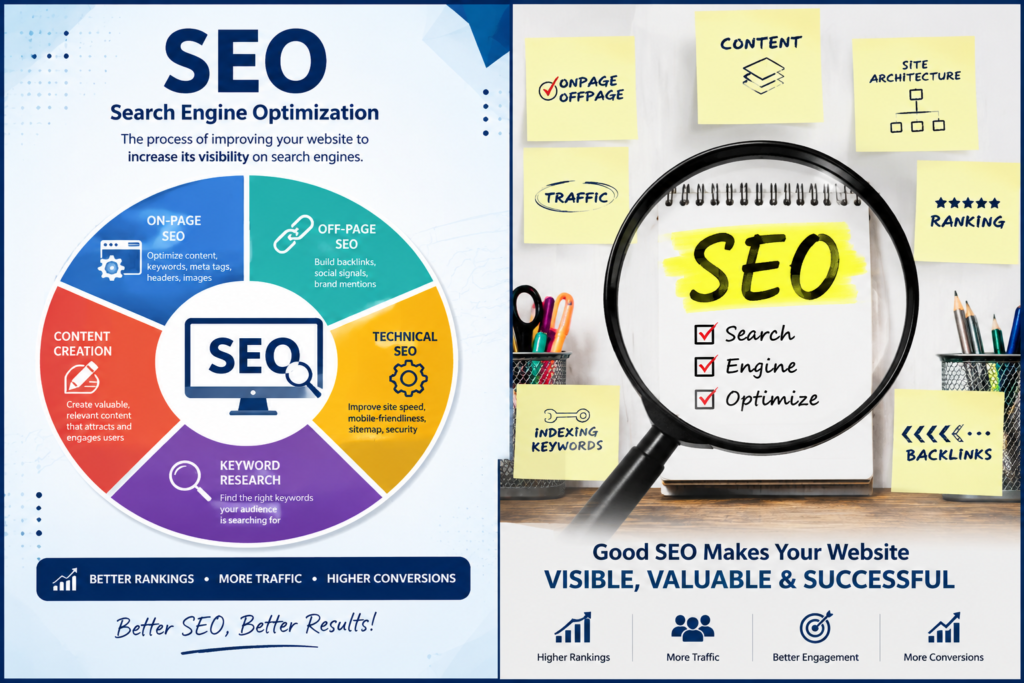
In today’s digital world, having a website is not enough. Millions of websites compete for attention every day, making it challenging for businesses to stand out online. This is where Search Engine Optimization (SEO) comes into play. SEO is one of the most effective digital marketing strategies for improving a website’s visibility on search engines like Google, Bing, and Yahoo. By optimizing your website for search engines, you can attract more organic traffic, generate quality leads, and increase sales without relying solely on paid advertising. Whether you’re a business owner, blogger, or digital marketing beginner, understanding SEO is essential for building a strong online presence. What is SEO (Search Engine Optimization)? Search Engine Optimization (SEO) is the process of improving a website’s content, structure, and authority to rank higher in search engine results pages (SERPs). The higher your website ranks for relevant keywords, the greater the chances of attracting potential customers. This means you have used proper SEO (Search Engine Optimization) For example, if someone searches for “best digital marketing agency in Bangalore”, websites optimized for that keyword are more likely to appear on the first page of Google. Why is SEO (Search Engine Optimization) Important? SEO offers several benefits that contribute to long-term business growth: Studies show that most users click on results displayed on the first page of Google, making higher rankings extremely valuable. That is what SEO is all about. How Google Search Engines Works Search engines follow three main steps: 1. Crawling Search engine bots scan websites to discover new and updated pages. 2. Indexing The discovered pages are stored in a massive database called the search index. 3. Ranking When users search for a query, search engines evaluate hundreds of ranking factors to determine which pages should appear first. These factors include content quality, page speed, mobile-friendliness, backlinks, keyword relevance, and user experience. Types of SEO (Search Engine Optimization) 1. On-Page SEO On-page SEO refers to optimizing elements within your website. Key activities include: Example: Poor URL:www.website.com/page123?id=45 SEO-Friendly URL:www.website.com/seo-guide 2. Off-Page SEO Off-page SEO focuses on building your website’s authority through external activities. Common techniques include: High-quality backlinks from reputable websites improve your website’s credibility in the eyes of search engines. 3. Technical SEO Technical SEO ensures that search engines can efficiently crawl and index your website. Important factors include: A technically optimized website provides a better experience for both users and search engines. Keyword Research Keyword research is the foundation of every successful SEO strategy. It helps identify the words and phrases your target audience uses when searching online. Types of Keywords Short-Tail Keywords Long-Tail Keywords Long-tail keywords generally have lower competition and higher conversion rates. Popular keyword research tools include: On-Page SEO Best Practices To improve rankings, follow these on-page optimization techniques: Off-Page SEO Strategies Some proven off-page SEO methods include: Focus on earning quality backlinks rather than acquiring a large number of low-quality links. Technical SEO Checklist A technically strong website should have: Technical SEO helps search engines understand your website more effectively. Common SEO Mistakes to Avoid Avoid these common mistakes: Consistently following SEO best practices leads to sustainable growth. Essential SEO Tools Here are some widely used SEO ( Search Engine Optimization ) tools: These tools help monitor website performance, identify issues, and uncover optimization opportunities. The Future of SEO SEO continues to evolve with advancements in technology. Businesses should stay updated with trends such as: Creating valuable, user-focused content will remain the key to long-term SEO success. Conclusion Search Engine Optimization is one of the most powerful digital marketing strategies for increasing online visibility and driving sustainable business growth. By combining high-quality content, effective keyword research, technical optimization, and authoritative backlinks, businesses can improve their search rankings and attract the right audience. SEO is not a one-time task but an ongoing process that requires regular updates, monitoring, and continuous improvement. With patience and a well-planned strategy, SEO can deliver lasting results, helping your website grow organically and stay competitive in the digital landscape.

Blog

SEARCH ENGINE MARKETING (SEM)

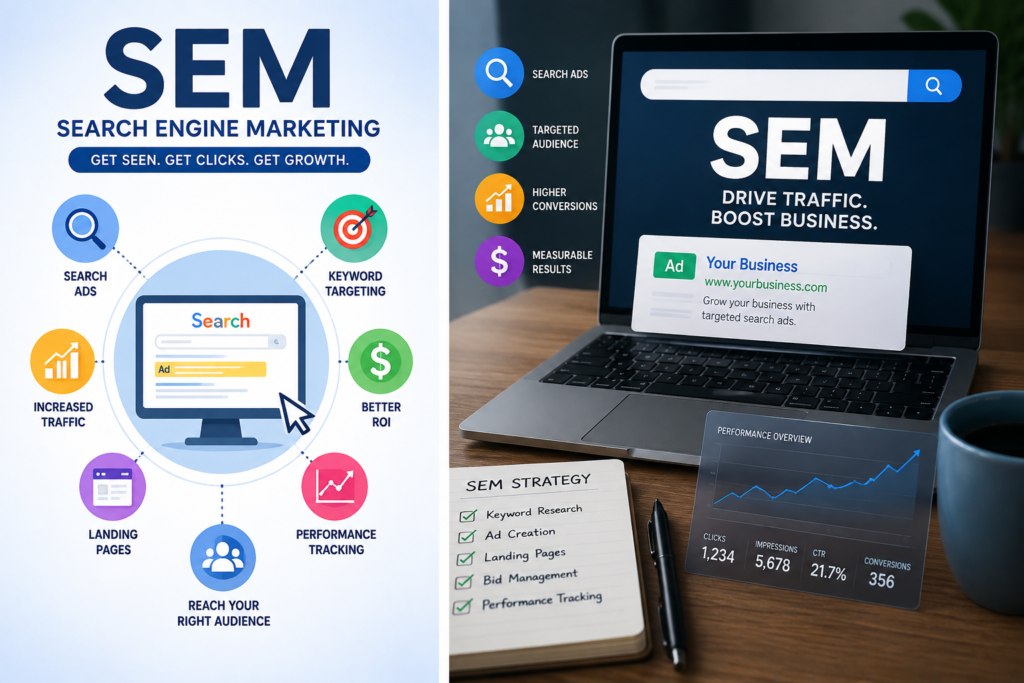
n today’s digital-first world, businesses need more than just a website to attract customers. They need to appear in front of the right people at the right time. This is where Search Engine Marketing (SEM) becomes important. SEM helps businesses promote their products and services on search engines such as Google and reach users who are actively searching for solutions. Whether you are a small business owner, startup, freelancer, or marketing professional, understanding SEM can help you generate targeted traffic, leads, sales, and brand awareness. What Is Search Engine Marketing? Search Engine Marketing (SEM) is a digital marketing strategy used to increase a website’s visibility on search engine results pages (SERPs), primarily through paid search advertising. For example, imagine someone searches Google for “best digital marketing agency in Bangalore.” Businesses can create paid search ads that may appear prominently for that search. If the user clicks the advertisement, the business can direct them to a landing page designed to generate a lead or sale. SEM is often associated with Pay-Per-Click (PPC) advertising, where advertisers generally pay when someone clicks on their advertisement. SEM is different from Search Engine Optimization (SEO). SEO focuses primarily on earning organic visibility, while SEM generally involves paying for advertising placements. How Does SEM Work? SEM platforms, such as Google Ads, use an advertising auction to determine which ads appear when users search for particular terms. The process generally begins with keyword research. Advertisers identify keywords that potential customers might use when searching for their products or services. For example, a boutique could target keywords such as: The advertiser then creates an advertisement related to those searches and chooses a landing page where users will be sent after clicking. Search engines consider several factors when determining ad placement, including the advertiser’s bid, ad relevance, landing-page experience, and expected performance. Therefore, simply having the highest budget does not automatically guarantee the best position. Key Components of SEM A successful SEM campaign involves several important components. 1. Keyword Research Keywords are the foundation of search advertising. Marketers need to understand what their target audience is searching for and identify keywords that have commercial intent. For example, someone searching for “what is digital marketing” may be looking for information, while someone searching for “digital marketing course near me” may have stronger purchase intent. Understanding search intent helps marketers select more valuable keywords. 2. Ad Copy An advertisement needs to capture attention quickly. A good search ad should clearly communicate the benefit of the product or service and encourage users to take action. Effective ad copy can include: For example, instead of simply saying “Women’s Clothing Available,” an advertisement could communicate a stronger benefit such as “Elegant Ethnic Wear | New Styles | Shop Online.” 3. Landing Pages Getting a click is only the beginning. The landing page needs to persuade the visitor to take the desired action. A good landing page should be relevant to the advertisement, load quickly, work well on mobile devices, and have a clear call to action. For a lead-generation campaign, the CTA could be “Get a Free Consultation” or “Request a Quote.” 4. Bidding and Budget Advertisers need to decide how much they are willing to spend. Depending on the campaign, businesses may optimize toward clicks, conversions, conversion value, or other objectives. Budget management is particularly important for small businesses because poorly optimized campaigns can consume advertising budgets without producing meaningful results. SEM vs SEO: What’s the Difference? SEM and SEO are both important search marketing strategies, but they work differently. SEM SEO Primarily uses paid advertising Primarily focuses on organic rankings Can generate visibility quickly Usually takes time to build Requires an advertising budget Does not require payment for each organic click Traffic can decrease when campaigns stop Successful rankings can continue generating traffic Offers detailed campaign targeting Relies heavily on content, technical SEO, authority, and relevance The best strategy depends on the business. Many companies use SEO and SEM together to create both immediate and long-term search visibility. Benefits of SEM SEM offers several advantages for businesses. Targeted Reach: Advertisers can target users based on keywords, location, device, audience characteristics, and other campaign settings. Immediate Visibility: Unlike organic search strategies that can take time, paid search campaigns can begin generating visibility soon after they are launched and approved. Measurable Results: SEM platforms provide data such as impressions, clicks, conversions, cost, and conversion rates. This allows marketers to evaluate campaign performance. Better Control Over Budget: Businesses can set campaign budgets and adjust spending based on performance. High Purchase Intent: Search advertising can reach users when they are actively looking for a product or service, making search traffic particularly valuable for many businesses. Important SEM Metrics One of the biggest advantages of digital advertising is the ability to measure performance. Some important SEM metrics include: Impressions: The number of times an advertisement is displayed. Clicks: The number of times users click an advertisement. Click-Through Rate (CTR): The percentage of impressions that result in clicks. Cost Per Click (CPC): The average amount paid for a click. Conversion Rate: The percentage of users who complete a desired action after interacting with the campaign. Cost Per Conversion: How much the advertiser spends, on average, to generate one conversion. Return on Ad Spend (ROAS): Revenue generated relative to advertising expenditure, where applicable. These metrics help marketers identify what is working and what needs improvement. Common SEM Mistakes Although SEM can be highly effective, poor campaign management can lead to wasted money. One common mistake is targeting overly broad keywords. Broad targeting may attract visitors who are not genuinely interested in the product. Another mistake is sending every advertisement to the same generic homepage. A highly relevant landing page can provide a better user experience. Ignoring negative keywords can also create unnecessary clicks. Negative keywords help prevent advertisements from appearing for irrelevant searches. Businesses should also avoid launching campaigns without tracking conversions. If marketers cannot determine which clicks produce leads or sales, it becomes difficult to measure actual

Blog

DIGITAL MARKETING: The Complete Guide

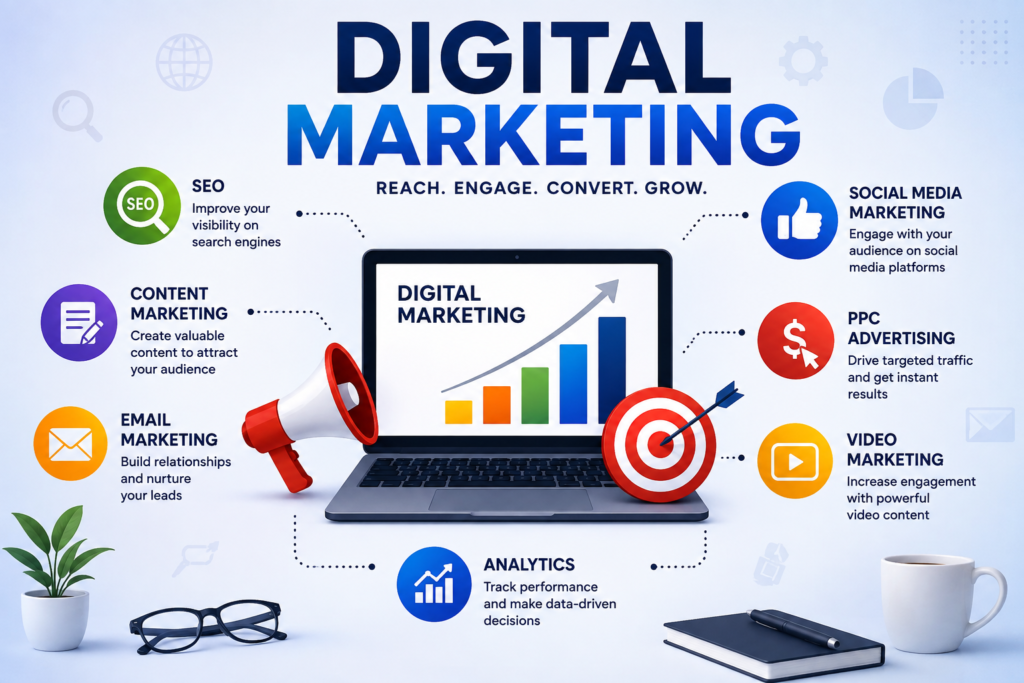
Introduction In today’s digital-first world, having an online presence is no longer optional—it’s essential. Whether you’re a small business owner, entrepreneur, freelancer, or marketer, digital marketing has become one of the most powerful ways to reach potential customers, build brand awareness, and drive business growth. Unlike traditional marketing, digital marketing allows businesses to connect with their target audience through websites, search engines, social media platforms, email campaigns, and online advertising. It offers measurable results, better customer targeting, and cost-effective marketing solutions for businesses of all sizes. In this guide, you’ll learn what digital marketing is, why it’s important, its major components, and how you can use it to grow your business successfully. What is Digital Marketing? Digital marketing is the promotion of products or services using digital channels such as search engines, websites, social media platforms, email, mobile apps, and online advertisements. The primary goal of digital marketing is to attract the right audience, engage them with valuable content, convert them into customers, and build long-term relationships. From startups to multinational corporations, almost every successful business today uses digital marketing to increase visibility and generate revenue. Why Digital Marketing Matters Digital marketing has transformed the way businesses communicate with customers. Here are some reasons why it has become indispensable: 1. Reach a Global Audience A business is no longer limited to its local area. With digital marketing, you can reach customers across cities, countries, or even the world. 2. Cost-Effective Marketing Compared to television, newspapers, and billboards, digital marketing offers affordable advertising options with higher returns on investment (ROI). 3. Target the Right Customers Digital platforms allow businesses to target audiences based on: This improves marketing efficiency and reduces wasted advertising spend. 4. Measure Performance Unlike traditional marketing, every campaign can be tracked using analytics. Businesses can monitor website traffic, clicks, conversions, engagement, and sales in real time. 5. Build Long-Term Relationships Through social media, newsletters, and personalized content, businesses can stay connected with customers and build trust over time. Key Components of Digital Marketing 1. Search Engine Optimization (SEO) SEO is the process of improving your website so it ranks higher on search engines like Google. Good SEO helps businesses: SEO includes keyword research, content optimization, technical SEO, mobile responsiveness, and backlink building. 2. Content Marketing Content is the foundation of digital marketing. Businesses create valuable content such as: Quality content educates customers, answers their questions, and positions the business as an industry expert. Remember: Content informs, builds trust, and drives conversions. 3. Social Media Marketing Billions of people use social media every day. Platforms include: Businesses use social media to: Consistent posting and audience engagement are key to success. 4. Email Marketing Despite the rise of social media, email marketing remains one of the highest ROI marketing channels. Businesses use email to: Personalized emails generally achieve better open and click-through rates than generic campaigns. 5. Pay-Per-Click (PPC) Advertising PPC allows businesses to display paid advertisements on search engines and social media platforms. Popular advertising platforms include: Businesses only pay when someone clicks on their advertisement, making PPC highly measurable and scalable. 6. Influencer Marketing Consumers trust recommendations from people they follow. Brands collaborate with influencers to: Choosing influencers whose audience aligns with your target market is essential. 7. Video Marketing Video has become one of the most engaging forms of digital content. Popular formats include: Videos help explain complex topics while increasing audience engagement and retention. Benefits of Digital Marketing Digital marketing offers numerous advantages over traditional marketing. Some major benefits include: Businesses can start with a small budget and scale campaigns as they grow. Common Digital Marketing Mistakes Many businesses fail to achieve results because they make avoidable mistakes. Some common mistakes include: Avoiding these mistakes can significantly improve marketing success. Future Trends in Digital Marketing Digital marketing continues to evolve with changing technology and consumer behavior. Emerging trends include: Businesses that adapt to these trends will stay competitive in the digital landscape. How to Get Started with Digital Marketing If you’re new to digital marketing, follow these steps: Consistency and patience are key to long-term success. Conclusion Digital marketing has revolutionized the way businesses connect with customers. It provides affordable, measurable, and highly targeted opportunities to grow online. Whether through SEO, content marketing, social media, email campaigns, or paid advertising, every strategy contributes to building a stronger digital presence. Success in digital marketing doesn’t happen overnight. It requires a clear strategy, continuous learning, quality content, and regular performance analysis. Businesses that focus on providing value to their audience while adapting to changing trends will be better positioned for sustainable growth. As more consumers rely on digital platforms to discover products and services, investing in digital marketing is no longer just an advantage—it’s a necessity. Start with the fundamentals, remain consistent, and keep refining your approach. Over time, digital marketing can become one of the most effective tools for expanding your reach, strengthening customer relationships, and achieving long-term business success.

Blog

Email Marketing: The Ultimate Guide to Building Customer Relationships and Growing Your Business

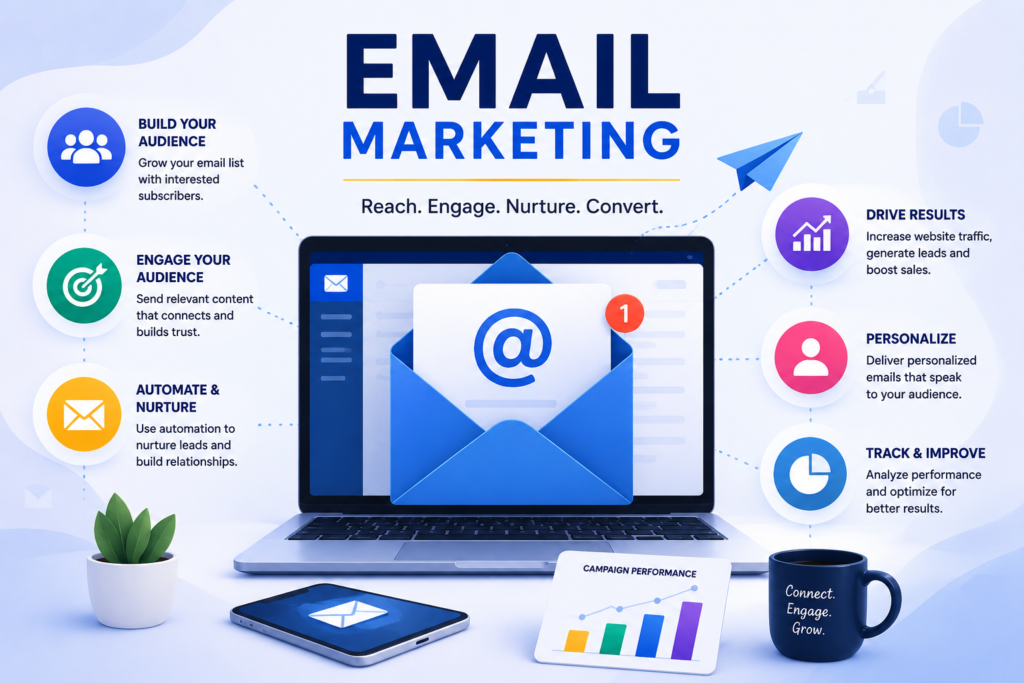
The Future of Email Marketing Technology continues to reshape digital marketing, and email marketing is no exception. Artificial intelligence, automation, and personalization are making campaigns smarter and more relevant than ever before. Businesses can now send automated welcome emails, recommend products based on customer preferences, and schedule emails when subscribers are most likely to engage. However, one thing remains unchanged: people value authentic communication. Technology can improve efficiency, but genuine, helpful, and relevant content is what builds lasting customer relationships. Why Is Email Marketing Important? Email marketing remains valuable because it gives businesses a direct communication channel with their audience. 1. Direct Communication An email reaches a person’s inbox rather than relying entirely on social media algorithms. This makes email particularly useful for maintaining an ongoing relationship with customers. 2. Lead Nurturing Not every visitor is ready to purchase immediately. Email allows businesses to nurture potential customers by providing useful information over time. For example: Visitor → Email subscriber → Engaged lead → Customer → Repeat customer This process can turn an initial interaction into a long-term relationship. 3. Personalization Email campaigns can be personalized using information such as a subscriber’s name, interests, previous purchases, or interactions with your business. Instead of sending exactly the same message to everyone, businesses can create more relevant communication for different audience segments. 4. Cost-Effective Marketing Compared with many traditional advertising channels, email can be relatively inexpensive to operate, especially for small businesses. Automation also allows businesses to send certain messages without manually creating every campaign. 5. Measurable Results One of the biggest advantages of digital marketing is the ability to measure performance. Email campaigns can be evaluated using metrics such as: These measurements help marketers understand what is working and what needs improvement. Different Types of Email Marketing Email marketing is not limited to promotional newsletters. Different emails serve different purposes. Welcome Emails A welcome email is sent after someone subscribes to your list. It is an opportunity to introduce your brand and explain what subscribers can expect. Promotional Emails These emails promote products, services, discounts, seasonal offers, or special events. For example: “New Collection Just Arrived – Explore Our Latest Styles.” Newsletter Emails Newsletters provide regular information, tips, educational content, company updates, or curated resources. Abandoned Cart Emails E-commerce businesses can remind customers about products they added to their shopping cart but did not purchase. Product or Service Updates Businesses can use email to announce new products, new services, features, events, or important updates. Re-engagement Emails If subscribers stop interacting with your emails, a re-engagement campaign can encourage them to return. How to Build an Effective Email Marketing Strategy Successful email marketing starts with a strategy rather than simply sending emails. Step 1: Build a Quality Email List Your email list is one of your most valuable marketing assets. Encourage people to subscribe through your website, landing pages, social media channels, events, or valuable resources. Avoid purchasing random email lists. A smaller audience that genuinely wants to hear from you can be much more valuable than a large list of uninterested recipients. Step 2: Segment Your Audience Your subscribers are not all the same. You could create segments based on: Segmentation allows you to make your communication more relevant. Step 3: Write Better Subject Lines The subject line is one of the first things a subscriber sees. Instead of: “Our New Products” try something more specific: “5 New Styles You’ll Want to See This Week” Your subject line should create curiosity while accurately representing the email’s content. Deceptive subject lines can damage trust and may also violate applicable commercial-email rules. Step 4: Create Valuable Content Every email should have a purpose. Ask yourself: “What will the reader gain from opening this email?” Your content could educate, solve a problem, provide inspiration, announce something useful, or present a relevant offer. The goal is to make subscribers look forward to receiving your emails. Step 5: Add a Clear Call to Action Every marketing email should guide the reader toward the next step. Examples include: Avoid overwhelming readers with too many competing actions. Step 6: Test and Optimize Email marketing improves through experimentation. You can test different: Over time, your campaign data can help you understand what resonates with your audience. Important Email Marketing Metrics Tracking performance is essential. Open Rate: Shows the percentage of delivered emails that were opened. However, open-rate data can be affected by privacy features and should not be treated as a perfect measure of engagement. Click-Through Rate (CTR): Measures how many recipients clicked links within the email. Conversion Rate: Shows how many recipients completed the desired action, such as purchasing a product or submitting a form. Unsubscribe Rate: Shows how many people opted out of your email list. Bounce Rate: Indicates emails that could not be delivered. Rather than focusing on one metric, marketers should evaluate several metrics together and connect them to business goals. Common Email Marketing Mistakes Many businesses make email marketing harder than it needs to be. Common mistakes include: The best email marketing strategies focus on relevance, value, consistency, and trust. Email Marketing and Compliance Businesses should understand the laws and regulations that apply to their audiences and locations. For example, in the United States, the CAN-SPAM Act establishes requirements for commercial email, including truthful header information, non-deceptive subject lines, a clear opt-out mechanism, and prompt handling of unsubscribe requests. The Federal Trade Commission states that commercial senders must honor opt-out requests within 10 business days. Businesses operating internationally may also need to consider other privacy and electronic-communications laws. Therefore, email marketing should be designed around both good marketing practices and applicable legal requirements. The Future of Email Marketing Email marketing is becoming increasingly sophisticated. Automation, audience segmentation, personalization, analytics, and artificial intelligence can help marketers create more relevant campaigns. However, technology does not replace the fundamentals. People still respond to emails that are useful, relevant, clear, and trustworthy. The businesses that succeed will not necessarily be the ones sending the most emails. They will

Scroll to Top