In today’s digital world, having a website is not enough. Millions of websites compete for attention every day, making it challenging for businesses to stand out online. This is where Search Engine Optimization (SEO) comes into play. SEO is one of the most effective digital marketing strategies for improving a website’s visibility on search engines like Google, Bing, and Yahoo. By optimizing your website for search engines, you can attract more organic traffic, generate quality leads, and increase sales without relying solely on paid advertising.
Whether you’re a business owner, blogger, or digital marketing beginner, understanding SEO is essential for building a strong online presence.
What is SEO (Search Engine Optimization)?
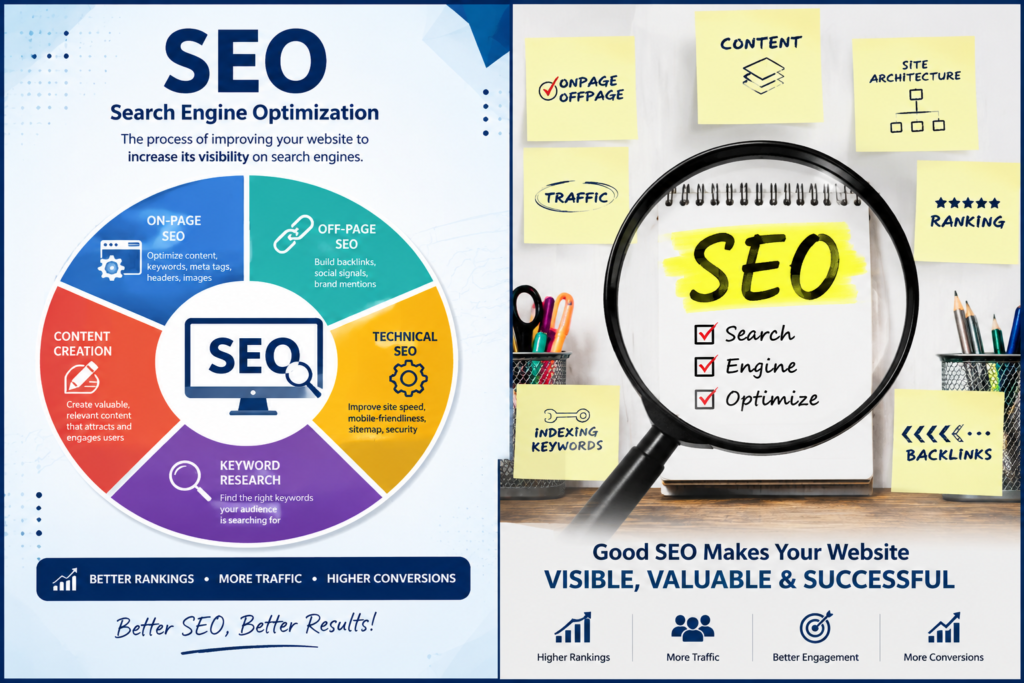
Search Engine Optimization (SEO) is the process of improving a website’s content, structure, and authority to rank higher in search engine results pages (SERPs). The higher your website ranks for relevant keywords, the greater the chances of attracting potential customers. This means you have used proper SEO (Search Engine Optimization)
For example, if someone searches for “best digital marketing agency in Bangalore”, websites optimized for that keyword are more likely to appear on the first page of Google.
Why is SEO (Search Engine Optimization) Important?
SEO offers several benefits that contribute to long-term business growth:
- Increases organic (free) website traffic
- Builds credibility and trust among users
- Improves user experience
- Generates high-quality leads
- Offers long-term results compared to paid advertising
- Delivers a higher return on investment (ROI)
- Strengthens brand awareness
Studies show that most users click on results displayed on the first page of Google, making higher rankings extremely valuable. That is what SEO is all about.
How Google Search Engines Works
Search engines follow three main steps:
1. Crawling
Search engine bots scan websites to discover new and updated pages.
2. Indexing
The discovered pages are stored in a massive database called the search index.
3. Ranking
When users search for a query, search engines evaluate hundreds of ranking factors to determine which pages should appear first.
These factors include content quality, page speed, mobile-friendliness, backlinks, keyword relevance, and user experience.
Types of SEO (Search Engine Optimization)
1. On-Page SEO
On-page SEO refers to optimizing elements within your website.
Key activities include:
- Keyword research
- Writing high-quality content
- Optimizing title tags
- Meta descriptions
- Header tags (H1, H2, H3)
- Internal linking
- Image optimization
- URL optimization
Example:
Poor URL:
www.website.com/page123?id=45
SEO-Friendly URL:
www.website.com/seo-guide
2. Off-Page SEO
Off-page SEO focuses on building your website’s authority through external activities.
Common techniques include:
- Backlink building
- Guest blogging
- Social media marketing
- Brand mentions
- Influencer outreach
- Online directory submissions
High-quality backlinks from reputable websites improve your website’s credibility in the eyes of search engines.
3. Technical SEO
Technical SEO ensures that search engines can efficiently crawl and index your website.
Important factors include:
- Website speed optimization
- Mobile responsiveness
- Secure HTTPS connection
- XML sitemap
- Robots.txt
- Canonical tags
- Structured data (Schema Markup)
- Fixing broken links
A technically optimized website provides a better experience for both users and search engines.
Keyword Research
Keyword research is the foundation of every successful SEO strategy. It helps identify the words and phrases your target audience uses when searching online.
Types of Keywords
Short-Tail Keywords
- SEO
- Digital Marketing
- Shoes
Long-Tail Keywords
- Best SEO tips for beginners
- Affordable digital marketing services
- Running shoes for women
Long-tail keywords generally have lower competition and higher conversion rates.
Popular keyword research tools include:
- Google Keyword Planner
- Ahrefs
- SEMrush
- Ubersuggest
- Google Trends
On-Page SEO Best Practices
To improve rankings, follow these on-page optimization techniques:
- Use your primary keyword naturally in the title.
- Include the keyword in the first paragraph.
- Write compelling meta descriptions.
- Use descriptive headings.
- Add relevant internal links.
- Optimize images with ALT text.
- Create user-friendly URLs.
- Improve page readability.
- Update content regularly.
Off-Page SEO Strategies
Some proven off-page SEO methods include:
- Guest posting
- Building high-quality backlinks
- Participating in online communities
- Social media promotion
- Influencer collaborations
- Local business listings
- Press releases
Focus on earning quality backlinks rather than acquiring a large number of low-quality links.
Technical SEO Checklist
A technically strong website should have:
- Fast loading speed
- Mobile-friendly design
- HTTPS security
- XML sitemap
- Clean URL structure
- Proper redirects
- No duplicate content
- Optimized Core Web Vitals
- Schema markup
Technical SEO helps search engines understand your website more effectively.
Common SEO Mistakes to Avoid
Avoid these common mistakes:
- Keyword stuffing
- Duplicate content
- Slow-loading pages
- Poor internal linking
- Missing meta tags
- Buying spammy backlinks
- Publishing low-quality content
- Not tracking SEO performance
Consistently following SEO best practices leads to sustainable growth.
Essential SEO Tools
Here are some widely used SEO ( Search Engine Optimization ) tools:
- Google Search Console
- Google Analytics
- Ahrefs
- SEMrush
- Moz
- Screaming Frog SEO Spider
- Yoast SEO (for WordPress)
- Rank Math
These tools help monitor website performance, identify issues, and uncover optimization opportunities.
The Future of SEO
SEO continues to evolve with advancements in technology. Businesses should stay updated with trends such as:
- AI-powered search
- Voice search optimization
- Mobile-first indexing
- User experience (UX)
- Core Web Vitals
- E-E-A-T (Experience, Expertise, Authoritativeness, and Trustworthiness)
- Video SEO
- Visual search
Creating valuable, user-focused content will remain the key to long-term SEO success.
Conclusion
Search Engine Optimization is one of the most powerful digital marketing strategies for increasing online visibility and driving sustainable business growth. By combining high-quality content, effective keyword research, technical optimization, and authoritative backlinks, businesses can improve their search rankings and attract the right audience. SEO is not a one-time task but an ongoing process that requires regular updates, monitoring, and continuous improvement. With patience and a well-planned strategy, SEO can deliver lasting results, helping your website grow organically and stay competitive in the digital landscape.