What Is Social Media Marketing?
Social media has changed the way people communicate, discover products and interact with businesses. Today, platforms such as Instagram, Facebook, LinkedIn, YouTube and TikTok have become important channels for businesses to reach their target audience.
Social Media Marketing (SMM) is the use of social media platforms to promote a business, build relationships with customers, increase brand awareness and achieve marketing goals.
Unlike traditional advertising, social media allows businesses to communicate directly with their audience. Customers can comment, share, ask questions, provide feedback and interact with brands.
For example, a clothing boutique can use Instagram to showcase new collections, create styling videos, share customer reviews and answer questions through direct messages. Instead of simply displaying an advertisement, the business can build a relationship with potential customers.
Why Is Social Media Marketing Important?
Social media marketing is important because customers are spending a significant amount of time on digital platforms. Businesses can use these platforms to reach people where they already spend their time.
Some major benefits include:
- Increased brand awareness
- Better customer engagement
- Website traffic
- Lead generation
- Improved customer relationships
- Product and service promotion
- Community building
- Opportunities to increase sales
Social media can be particularly useful for small businesses because they can start building an online presence without requiring the same advertising budget as traditional media.
However, simply creating an account does not guarantee success. Businesses need a clear strategy, relevant content and consistent communication.
Popular Social Media Platforms
Different social media platforms attract different audiences and support different types of content.
Instagram is highly visual and is particularly useful for businesses that can showcase products, services, people or experiences.
Businesses can use:
- Reels
- Stories
- Carousels
- Images
- Live videos
- Direct messages
For example, a fashion brand can use Reels to demonstrate different ways to style the same outfit.
Facebook offers businesses opportunities to publish posts, videos, images, events and community-focused content. It can also be useful for reaching specific audiences through advertising.
LinkedIn is primarily focused on professional networking and is particularly useful for B2B businesses, professionals and personal branding.
Businesses can share industry insights, company updates, educational content and thought leadership.
YouTube
YouTube is an important platform for long-form and short-form video content. Tutorials, product demonstrations, educational videos, reviews and interviews can help businesses establish expertise.
TikTok
TikTok focuses heavily on short-form video and creative, entertaining content. Businesses can use it to reach audiences through engaging and authentic videos.
The best platform is not necessarily the one with the largest number of users. It is the platform where your target audience is most active and where your business can consistently create valuable content.
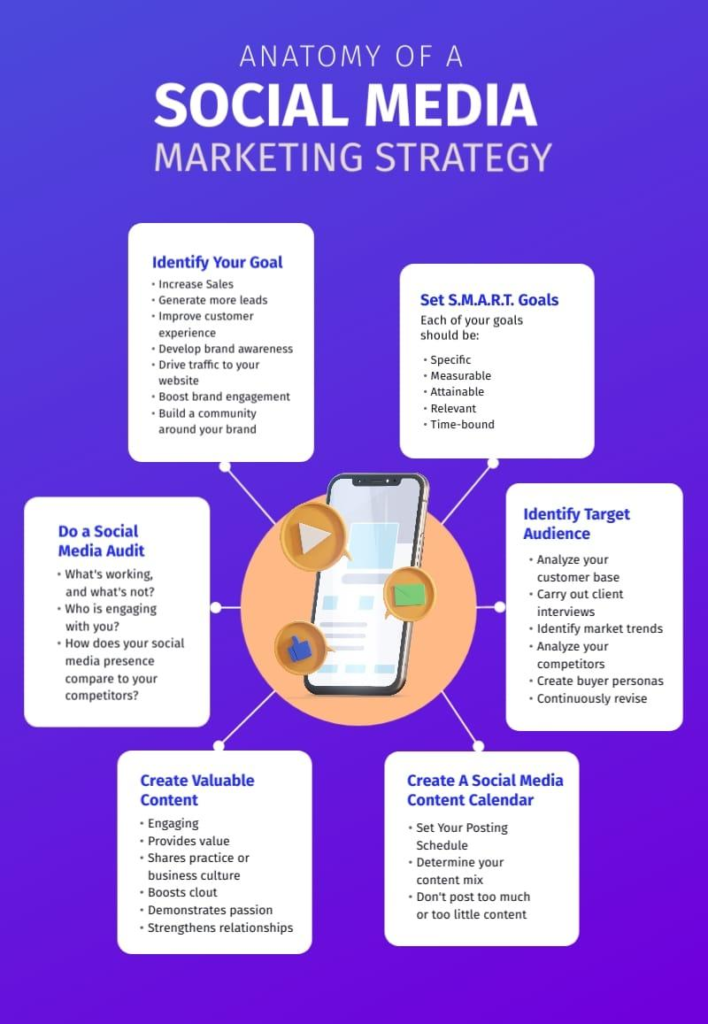
How to Create a Social Media Marketing Strategy
A successful social media presence starts with a strategy rather than random posting.
1. Define Your Target Audience
First, identify who you want to reach.
Consider:
- Age
- Location
- Interests
- Occupation
- Problems
- Buying behaviour
- Online habits
For example, a business selling premium ethnic wear may target women interested in fashion, ethnic clothing and styling.
Understanding the audience helps determine what content to create and where to publish it.
2. Set Clear Goals
Your social media activity should have a specific purpose.
Your goals might include:
Brand awareness: Increase reach and visibility.
Engagement: Encourage comments, shares and conversations.
Lead generation: Get potential customers to submit their contact details.
Sales: Drive customers toward purchasing products or services.
Community building: Develop a loyal audience around the brand.
Having clear goals also makes it easier to measure performance.
3. Create Valuable Content
Content is the foundation of social media marketing.
Instead of constantly promoting products, businesses should create a mix of educational, entertaining, inspirational and promotional content.
For example, a boutique could create:
- Outfit styling tips
- Fashion trends
- Behind-the-scenes videos
- Customer testimonials
- New collection announcements
- Frequently asked questions
- Fashion tips
- Product demonstrations
A useful approach is to create content pillars. These are a few consistent themes that guide what you publish.
For example:
Education + Inspiration + Entertainment + Promotion
This makes content planning much easier.
The Importance of Consistency
One of the biggest mistakes businesses make is posting frequently for a few days and then disappearing for weeks.
Consistency helps businesses stay visible and gives audiences more opportunities to interact with the brand.
However, consistency does not mean posting every day at any cost.
A realistic schedule could be:
- 3 Instagram posts per week
- 2–3 Stories per day
- 1 Reel per week
- 2 LinkedIn posts per week
The exact frequency should depend on your resources, audience and platform.
It is better to consistently publish useful content than to post large amounts of low-quality content.
Organic Social Media vs Paid Social Media
Social media marketing can generally involve both organic and paid activities.
Organic Social Media
Organic content is published without directly paying for advertising.
Examples include:
- Regular posts
- Reels
- Stories
- Comments
- Community engagement
Organic marketing is useful for building relationships and developing a loyal audience over time.
Paid Social Media
Paid social media involves advertising to reach selected audiences.
Businesses can use advertising to target people based on factors such as demographics, interests and online behaviour, depending on the platform and available targeting options.
Paid advertising can help businesses reach a larger audience and support objectives such as website visits, leads and sales.
A strong social media strategy can combine both organic content and paid campaigns.
How to Measure Social Media Marketing Success
Posting content is only one part of social media marketing. Businesses should also measure their results.
Some important metrics include:
- Reach
- Impressions
- Engagement rate
- Likes
- Comments
- Shares
- Saves
- Follower growth
- Website clicks
- Leads
- Conversions
- Sales
The most important metric depends on the goal.
For example, if your objective is brand awareness, reach and impressions may be important.
If your goal is lead generation, leads and conversions are more meaningful than simply counting likes.
Analytics can also help identify which content performs best so that the strategy can be improved.
Common Social Media Marketing Mistakes
Businesses often make several avoidable mistakes.
Posting Without a Strategy
Random content can make a brand look inconsistent. Create a content plan based on your goals and audience.
Focusing Only on Selling
If every post says “Buy Now,” followers may lose interest. Provide useful information and entertainment along with promotional content.
Ignoring Comments and Messages
Social media is about communication. Responding to questions and comments can strengthen customer relationships.
Trying to Be Everywhere
Managing every platform can become difficult. Start with one or two platforms where your audience is most active.
Not Checking Analytics
Without measuring results, it is difficult to know what is working.
The Future of Social Media Marketing
Social media marketing continues to evolve. Short-form video, creator partnerships, social commerce, personalized content and artificial intelligence are changing how brands communicate with customers.
At the same time, authenticity remains important. People want to see real experiences, useful information and relatable communication rather than only polished advertisements.
Businesses that listen to their audiences, experiment with different content formats and continuously analyze their results are better positioned to adapt to changes in social media.
Conclusion
Social media marketing is much more than posting pictures and collecting likes. It is a strategic way for businesses to connect with customers, build brand awareness, create communities and support business growth.
A successful strategy starts with understanding the target audience, choosing the right platforms, creating valuable content, maintaining consistency and measuring performance.
Whether you are a large company, a startup, a freelancer or a small local business, social media can become a powerful part of your digital marketing strategy.
Remember the basic formula:
Know Your Audience → Set Goals → Create Valuable Content → Engage → Measure → Improve
The key to successful social media marketing is not simply posting more. It is posting with purpose.